Find out how to choose the right septic tank that suits your land and usage. Get expert guidance on materials, size, and regulations for efficient waste treatment.
Rules and permits in the UK
In England, homes with small sewage discharges can have a septic tank installed without an environmental permit if they meet the General Binding Rules (GBR).
To meet the GBR, septic tanks must not discharge into surface water, and if you need to discharge into a river or stream, you must use a small sewage treatment plant (package treatment plant) instead. For discharges into the ground, the water flow must be under or equal to 2 m³ per day, and you must use a drainage field that's designed for this standard.
For septic tank drainage into surface water through a treatment plant, additional siting and capacity limits apply, including the 5 m³ per day threshold and proximity checks.
If you can’t meet the GBR (e.g. you’re too close to a foul sewer, protected site, or you exceed the flow limits), you must apply for a permit. Building Regulations approval is required for new septic tank systems, and planning permission may also be needed depending on the tank's size and location.
Tank materials and types
A septic tank's materials and type determine its compliance, longevity, installation cost, and day-to-day reliability. Polyethene/plastic tanks are lightweight and easy to handle, which makes them ideal for sites with restricted access or where heavy machinery is impractical.
They don’t corrode over time, and they can be installed quickly - but they rely on backfilling to keep their shape. In high water-table areas, polyethene tanks might also need concrete collars or ground anchors to prevent flotation.
GRP/fibreglass septic tanks also have the same corrosion resistance as polyethene tanks, and they're more rigid, which reduces the risk of distortion during the installation period or when the soil settles. GRP tanks are relatively light compared to other materials, which is convenient, yet, like plastic tanks, they still require buoyancy control and careful bedding and backfill to stop the tank from floating in high-water areas.
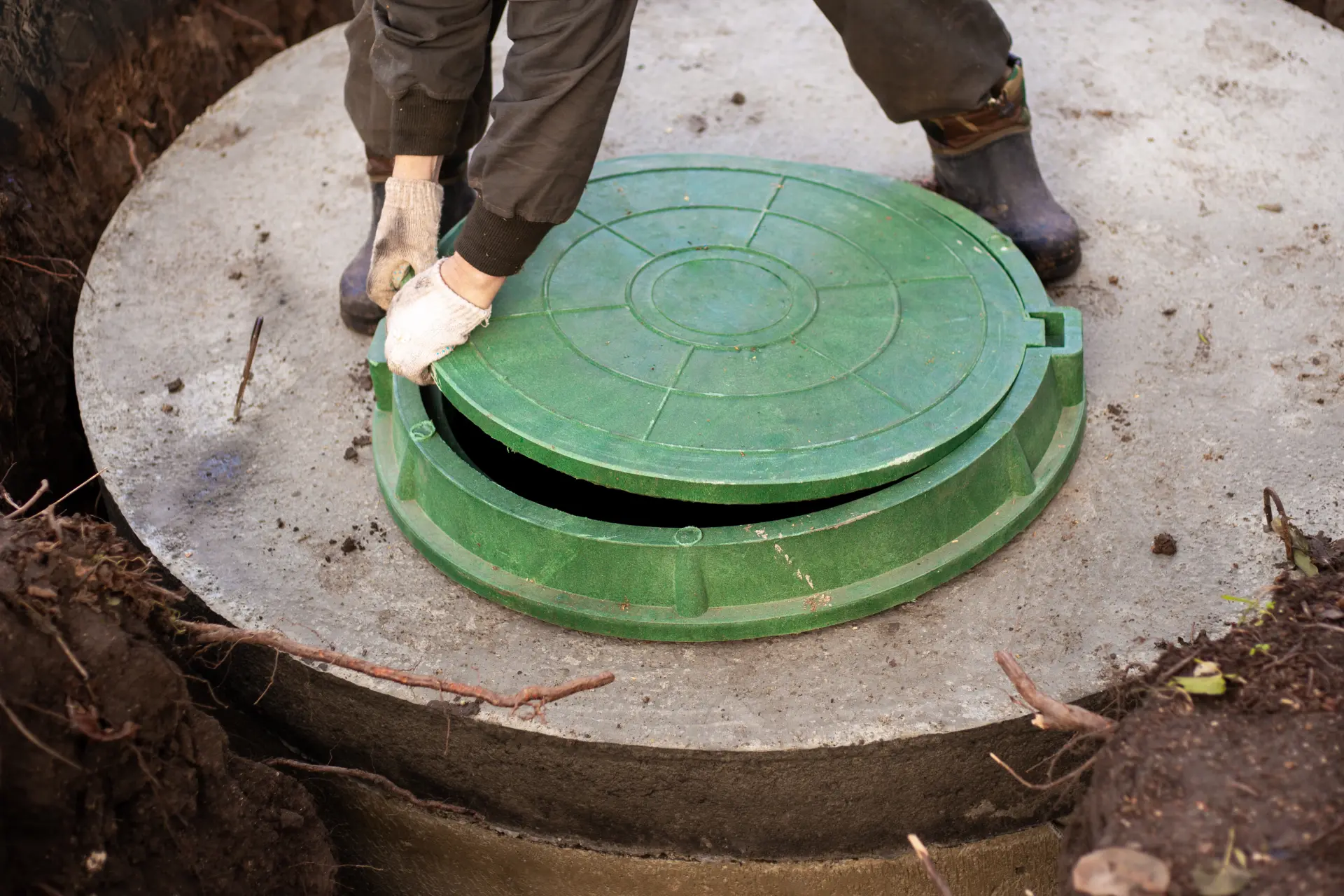
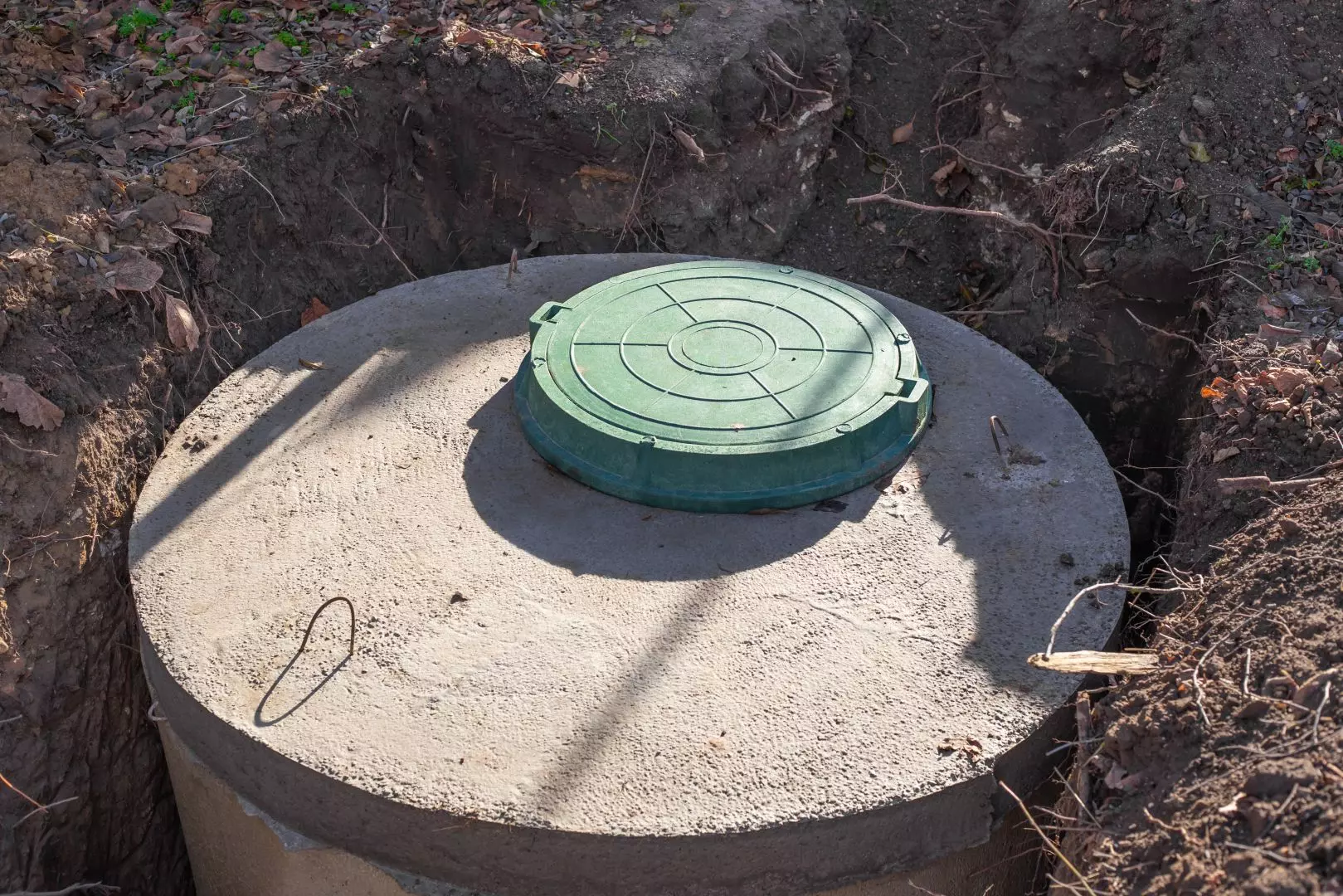
Concrete tanks have exceptional structural strength and stability, which helps them resist ground movement and uplift. This makes concrete septic tanks a great choice for high-traffic locations or areas that are prone to high groundwater.
Concrete tanks are also heavier to place, and they often need a crane, meaning they have a higher installation cost compared to other tanks.
A package treatment plant (certified to BS EN 12566-3) adds aeration to improve the septic tank's effluent quality. This type of tank is typically chosen if you need to discharge wastewater into a watercourse or if there isn’t enough land for a large drainage field.
A cesspool/holding tank stores raw sewage and relies on frequent emptying by a tanker to remove the collected wastewater. This type of septic tank is usually installed as a last resort if discharging into the ground or surface water is impossible.
Soil type and percolation test
Choosing the right septic tank system starts by inspecting the ground beneath your feet. Your property's soil type and a formal percolation test determine whether a septic tank with a drainage field is viable, how large the field must be, and what alternatives you should consider. If you skip this step, you risk flooding your garden with effluent, breaching Building Regulations, and facing expensive remedial work or enforcement action.
Free-draining sand and gravel allow treated effluent to disperse safely through the unsaturated zone, while dense clay can hold the water and cause ponds, odours and back-ups. Chalk and fissured rock can drain quickly, but they can also create pathways to the groundwater if the materials aren't assessed carefully.
During a percolation test, an engineer will compare the measured infiltration rate to the drainage field trenches to ensure that the soil can absorb the water flow at an acceptable rate. If the soil accepts the water too slowly, a septic tank with a drainage field is unsuitable, and you may need a package treatment plant with tighter controls or an alternative discharge route. However, if the soil drains too fast, there can be groundwater protection and erosion concerns, which can push you towards installing higher-treatment tank options.
Size and capacity guide
In the UK, reputable guides like British Water: Flows and Loads can translate your home's occupancy into a daily flow and organic load rate. These guides focus on using the number of people in your home to produce a flow rate in litres per day.
This figure can help you decide on the tank's working volume, drainage field area or treatment plant model. Using a guide also helps you avoid under-sizing the tank, which is a common cause of odours, pump-outs, soggy ground and permit breaches.
A tank's capacity consists of two parts: hydraulic (how much wastewater arrives) and organic (how much “load” the system must treat).
Your tank's usage varies depending on the number of people living in your home, so your tank's size should be able to accommodate your lifestyle patterns (long showers, baths, dishwashers and washing machines).
A correctly sized tank should also provide enough settlement volume to smooth out any surges in usage so that any solids remain in the tank rather than washing into the drainage field, where they can clog the soil.
Regulatory thresholds are another reason to choose your tank's size carefully. In England, most small discharges into the ground fall under the General Binding Rules if the water flow is up to 2 m³ per day, and if treated discharges into surface water are up to 5 m³ per day.
However, if these limits are breached, it can result in fines and enforcement action depending on whether there's a risk of pollution.
At Drain & Septic Solutions Derby, we can supply and install a range of certified septic tanks and treatment plants across Derby, Nottingham and Leicester. We can handle everything from percolation testing and sizing to groundwork and drainage fields. We aim to install compliant septic tank systems that handle your wastewater properly.